
Views: 0 Author: Site Editor Publish Time: 2026-09-01 Origin: Site


Picture this: you have spent hours meticulously preparing a layered holiday lasagna, only to hear a catastrophic, muffled "pop" from the kitchen shortly after sliding the heavy pan into a roaring oven. This heartbreaking nightmare is all too common. The culprit? Many home chefs completely ignore how their specific appliance generates heat when selecting new bakeware. Relying solely on a vague "oven-safe" label is a costly mistake that inevitably leads to shattered dishes, ruined dinners, and a dangerous mess of glass shards.
To prevent such structural failures, evaluating your kitchen setup is essential. Understanding exactly how your specific oven distributes thermal energy is the crucial first step before choosing your next culinary vessel. In this comprehensive guide, you will learn how to seamlessly match your appliance's heat dynamics with the appropriate material. We will also explore why upgrading to a specialized borosilicate glass baking tray serves as the ultimate safeguard for safe and efficient high-temperature cooking.
Before matching cookware to your oven, it is vital to understand the underlying material properties. Commercial kitchens and experienced culinary professionals do not rely on guesswork; they consistently choose borosilicate over standard glass alternatives. Delving into the material science explains precisely why a borosilicate glass baking tray acts as a reliable, unyielding foundation for complex meal preparation.
The secret to the legendary durability of Heat-resistant borosilicate glass lies entirely in its unique chemical composition. While traditional glass is manufactured primarily from a basic blend of silica, sodium carbonate, and calcium oxide, borosilicate incorporates a significant percentage of boron trioxide—typically ranging between 13% and 15%. This strategic structural addition fundamentally transforms how the material reacts to intense thermal stress.
Specifically, boron trioxide grants the glass an exceptionally low coefficient of thermal expansion (CTE), generally around 3.3 × 10⁻⁶/K. In practical terms, when this glass is exposed to a 400°C oven, it expands very little. Conversely, when it cools down on the kitchen countertop, it contracts minimally. Because the molecular structure does not shift rapidly, internal tension remains negligible. This precise scientific mechanism prevents the glass from violently shattering during sudden temperature changes, rendering thermal shock resistance a defining feature for daily culinary use.
Currently, the consumer market is flooded with standard soda-lime glass bakeware that has simply been tempered to increase its mechanical strength. While tempered soda-lime glass is undeniably resistant to impact if dropped on a tile floor, it performs rather poorly under rapid temperature fluctuations.
To make an informed, professional decision when upgrading your kitchen bakeware, consider the objective engineering differences between these two common glass materials:
Feature | Borosilicate Glass | Soda-Lime (Tempered) Glass |
|---|---|---|
Primary Additive | Boron Trioxide | Sodium Carbonate (Soda) |
Thermal Expansion (CTE) | Very Low (approx. 3.3 × 10⁻⁶/K) | High (approx. 9.0 × 10⁻⁶/K) |
Thermal Shock Limit (ΔT) | Can withstand up to 120°C (248°F) sudden change | Typically limited to a 50°C (122°F) sudden change |
Best Use Case | Extreme temperature transitions (Freezer to oven) | Mechanical durability (Resisting physical drops) |
Failure Mode | Cracks into large, manageable structural pieces | Shatters explosively into thousands of small, blunt cubes |
Consequently, for any cooking process that involves high ambient heat, freezing, or seamlessly transitioning between the two environments, borosilicate remains the objectively superior choice for safety and performance.
Recent market analyses of the culinary equipment sector highlight a fascinating and rapid shift. As residential kitchens become increasingly equipped with pro-sumer appliances—such as high-intensity air fryers and smart steam-convection ovens—the thermal demands placed on cookware have skyrocketed. These modern appliances heat up incredibly fast and maintain aggressive temperature curves. As a result, consumers and chefs are actively abandoning easily compromised tempered glass in favor of professional-grade borosilicate that safely interfaces with advanced, rapid-heating technologies. Defining the exact appliance your dish will be used in is paramount, as different ovens utilize entirely different methods of heat transfer.
Conventional ovens rely heavily on radiant heat emanating from heating elements located at the top and bottom of the insulated cavity. The heat slowly fills the space, creating a steady, ambient cooking environment where a borosilicate glass baking tray absolutely thrives. Because glass acts as a relatively slow conductor of heat, it takes a few moments to warm up. However, once it reaches the target temperature, it retains that thermal mass exceptionally well. This even, sustained heat distribution makes it the perfect vessel for baked pastas and slow-roasted root vegetables. Furthermore, the gradual temperature curve of a conventional preheating cycle poses virtually no thermal shock risk.
In stark contrast, convection ovens and modern countertop air fryers utilize powerful internal fans to circulate hot air rapidly around the food. This forced-air mechanism drastically accelerates the rate of heat transfer, often cooking meals up to 25% faster than conventional methods. When utilizing a Clear Borosilicate Oven Dish in a convection setting, the primary advantage is enhanced visual monitoring. Because circulating air accelerates exterior browning, food can easily overcook on the bottom without you noticing. The absolute, unclouded clarity of the glass allows you to carefully monitor the bottom crust of your pies or breads without opening the oven door and releasing valuable heat.
Toaster ovens present a highly unique and often dangerous challenge. Because the internal cavity is significantly smaller than a standard range, the bakeware is forced into incredibly close proximity with exposed, glowing radiant heating elements. If a glass tray is placed too close to these coils, it experiences intense, localized heat rather than gentle ambient heat, causing uneven thermal expansion. If you intend to use a glass baking tray in a toaster oven, you must strictly measure the interior dimensions. Ensure there is an absolute minimum of two inches of clearance between the edges of the glass and the heating elements to guarantee safe operation.
Microwave ovens heat food using dielectric heating, emitting electromagnetic waves that rapidly excite water molecules hidden within the food. Borosilicate is completely non-reactive to microwave radiation, making it an ideal, remarkably safe vessel. Unlike plastic containers, which can warp or leach undesirable chemicals into your meal, or metal pans, which create dangerous electrical arcing, borosilicate remains perfectly inert. It serves as the ultimate material for safely reheating dense leftovers directly from the refrigerator.
To safely deploy glass in a fast-paced culinary environment, users must understand the hard numbers behind its thermal tolerances. Relying on vague marketing terms can quickly lead to user error. Utilizing professional bakeware requires knowing the exact temperature ceilings and transition limits of the material.
High-quality Heat-Resistant Glass is meticulously engineered to withstand substantial ambient heat. Generally speaking, a premium borosilicate tray can safely endure continuous, prolonged oven temperatures up to 400°C (752°F). Considering that the vast majority of residential baking, roasting, and braising occurs comfortably between 175°C (350°F) and 230°C (450°F), the material offers a massive margin of safety. However, it is crucial to remember that this maximum temperature rating assumes ambient, even heat; it absolutely does not apply to direct, concentrated heat sources like a stovetop flame.
The true test of borosilicate is its outstanding resistance to thermal shock—the sudden, violent change in temperature. The maximum safe temperature differential (noted in engineering terms as ΔT) for high-grade borosilicate is typically 120°C (248°F). This indicates that the glass can survive an instant temperature swing of up to 120 degrees Celsius without fracturing.
Practically applied, if you have a frozen casserole sitting in a deep freeze at -18°C (0°F), you cannot safely place it directly into a roaring 200°C (400°F) oven. The temperature difference is 218°C, far exceeding the safety threshold. The correct procedure is to remove the frozen dish and allow it to rest on the counter for 30 to 45 minutes while the oven preheats. This simple step narrows the temperature gap, allowing the glass to transition gracefully without experiencing catastrophic structural stress.
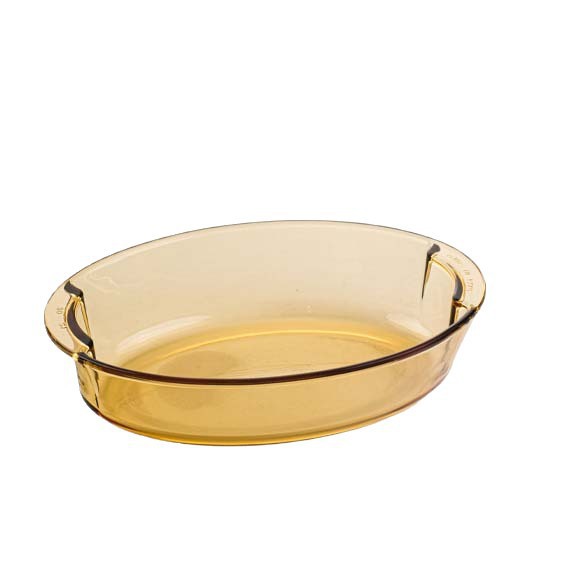
Once you have thoroughly defined your oven type and understand the strict thermal limits, you must evaluate the physical design of the bakeware itself. Not all glass trays are manufactured with the same rigorous attention to user ergonomics and airflow dynamics. Here is how to evaluate a borosilicate glass baking tray like a pro.
Proper sizing extends far beyond simply ensuring the dish physically fits through the oven door. Ambient baking requires continuous, uninterrupted airflow around the cooking vessel to ensure even heat distribution. Grab a tape measure and check your oven's interior racks. You must ensure that there is a minimum of 1.5 to 2 inches of empty space between the exterior walls of the glass tray and the interior walls of the oven. A tray that is too large will block airflow, creating unpredictable hot and cold zones that ultimately lead to unevenly cooked food.
Glass is an inherently heavy material. When filled to the brim with a dense meal like a scalloped potato gratin, a baking tray can easily weigh several pounds. In addition, the surface becomes incredibly slick when exposed to cooking oils or steam condensation. Therefore, selecting a tray with robust, ergonomically designed handles is a non-negotiable safety requirement. Look closely for trays that feature thick, extended glass handles, providing enough depth for bulky silicone oven mitts to grip securely and safely.
One of the primary reasons culinary professionals choose glass over heavy ceramic or cast iron is its visual transparency. When baking complex dishes with delicate, flaky crusts, the bottom of the food is often the most difficult area to monitor. A perfectly clear dish allows you to lift the tray slightly and visually inspect the browning of the bottom layer without digging a spatula into the food. Ensure the borosilicate glass you choose boasts high light transmittance and is completely free from manufacturing bubbles or cloudy striations.
While the classic rectangular borosilicate glass baking tray serves as the cornerstone of glass bakeware, the true utility of this material is fully realized when you expand into a complete, standardized kitchen ecosystem. Utilizing the exact same heat-resistant material across various vessel shapes beautifully streamlines the cooking, storing, and reheating processes.
A Heat-resistant glass bowl is arguably one of the most versatile and underappreciated tools in a modern kitchen. Because of its incredible thermal stability, it can be seamlessly used as the top vessel in a double boiler (bain-marie) for gently melting artisan chocolate or whisking delicate hollandaise sauces over simmering water. The bowl can transition directly from that hot water bath to a freezing ice bath to rapidly halt the cooking process—without any fear of cracking. Beyond sauces, deep glass bowls are frequently utilized by artisan bread bakers to proof wet dough, and they can even be placed directly into the oven to bake stunning dome-shaped loaves.
Modern meal preparation heavily relies on batch cooking and precise portion control. Traditional plastic storage containers degrade over time, absorb pungent odors, and pose chemical leaching risks when heated. Investing in High borosilicate glass jars provides a seamless, elegant solution for single-serving meals. You can easily bake individual portions of savory pot pies, baked oats, or rich custards directly inside the jars. Once the food has cooled, simply apply an airtight lid and store it safely in the refrigerator. This method completely eliminates the tedious need to transfer food between multiple pans and containers, dramatically reducing both cleanup time and the risk of cross-contamination.
Despite its superior engineering and impressive thermal shock resistance, heat-resistant borosilicate glass is not entirely indestructible. It remains a specialized material designed to manage ambient temperature changes gracefully, but it is highly susceptible to specific types of localized thermal stress. Preventing catastrophic failure requires strict adherence to a few essential operational boundaries.
One of the most common causes of borosilicate glass failure is accidental exposure to a kitchen broiler. Broilers operate by emitting intense, direct, and highly concentrated infrared radiation downward onto the food, often reaching blistering temperatures in excess of 260°C to 288°C (500°F to 550°F) within mere minutes. Because this heat is directional, it heats the top rim of the glass dish much faster than the shielded bottom or sides. This uneven, rapid heating creates extreme localized thermal expansion that will cause even the highest quality glass to shatter violently.
Whether you are operating a gas range, an electric coil stovetop, or an induction burner, you must never place glass bakeware directly on the heat source. A stovetop burner applies intense conductive heat to a very small, specific area of the glass bottom. While the glass directly over the flame expands instantly, the surrounding vertical walls remain cool and rigid. The resulting structural tension will inevitably cause the dish to crack right down the middle. If you are roasting a chicken and want to deglaze the pan drippings to make a rich gravy, carefully pour those drippings into a metal saucepan first. Never place your glass baking tray on the stove to simmer.
A lesser-known but equally critical rule is avoiding the "dry roasting" of meats or vegetables that release heavy fats. When roasting a fatty cut of beef, the ambient oven temperature might be a safe 200°C (400°F). However, if the dish is too large for the portion of food, large areas of the glass bottom remain bone-dry and fully exposed to the oven's heat. If a drop of relatively cool rendered fat suddenly splatters onto a super-heated dry spot on the glass, it creates a dangerous micro-environment of thermal shock. To mitigate this risk completely, always ensure the bottom of your glass tray is covered with a thin buffer layer of liquid—such as broth, wine, or water—before placing it in the oven.
Proper post-cooking care is absolutely essential to maintain the structural integrity and visual clarity of your glass bakeware over years of heavy, demanding use. Effective maintenance requires a basic understanding of how glass reacts to both cooling and physical abrasion.
The brief period immediately after removing a bubbling dish from the oven is when it is most vulnerable to thermal shock. Never place a hot glass tray onto a wet countertop, a cold granite island, or a stainless steel sink. These dense surfaces act as rapid heat sinks, aggressively pulling heat away from the bottom of the glass while the sides remain hot. This causes instant contraction and cracking. Always place your hot glass bakeware onto a dry, thick cloth potholder, a wooden cutting board, or a dedicated silicone cooling trivet. Allow the dish to cool completely to room temperature before attempting to wash it.
Over time, polymerized cooking oils can bake onto the surface of the glass, creating a sticky, amber-colored residue that ruins the aesthetic clarity of the dish. To remove this stubborn grime without damaging the glass, avoid using harsh steel wool or abrasive scouring pads. These aggressive tools create microscopic scratches (micro-abrasions) on the surface. While invisible to the naked eye, these scratches act as weak points where thermal stress can concentrate, eventually leading to unexplained cracking while in the oven.
Instead, rely on gentle chemistry. Coat the baked-on grease with a thick paste made of baking soda and warm water. Let it sit undisturbed for 30 to 45 minutes to break down the stubborn lipid bonds, then gently scrub the area with a non-abrasive nylon sponge or a silicone scraper. The grease will effortlessly lift away, leaving the glass pristine.
Borosilicate glass is highly resistant to chemical corrosion, making it fully and safely compatible with modern dishwashers. It will not warp under the high heat of a dishwasher's drying cycle, nor will it become permanently cloudy when exposed to harsh, alkaline dishwashing detergents. However, special care must be taken during the loading process. Ensure the glass tray is securely positioned in the rack so that it does not rattle or aggressively strike against heavy metal pots or ceramic plates during the turbulent wash cycle. Repeated impacts can cause mechanical chipping along the delicate edges.
Defining your specific oven type and understanding how it distributes heat is the most critical step you can take before upgrading your kitchen arsenal. It ensures you invest in the exact right equipment tailored for your home's unique culinary environment, preventing dangerous accidents and ruined meals.
Investing in a genuine borosilicate glass baking tray offers incredible peace of mind. It provides superior, even cooking performance, unmatched visual clarity, and a level of thermal longevity that standard tempered glass simply cannot replicate. By expanding your collection to include versatile bowls and storage jars, you create a seamless and highly efficient workflow from prep to storage.
Take a moment to assess your daily kitchen needs and measure your oven space. Ready to upgrade your bakeware for a safer, vastly improved cooking experience? Explore the professional-grade thermal solutions at SDJY Glass to find the perfect heat-resistant vessels tailored precisely to your culinary ambitions.
Yes, a borosilicate glass baking tray is explicitly engineered to handle a significantly higher degree of thermal shock than regular soda-lime glass. Its low coefficient of thermal expansion means it resists rapid shrinking and swelling. However, to maximize the lifespan of your bakeware and adhere to the safest operational parameters, it is always best practice to let the cold dish sit at room temperature for 15 to 20 minutes while your oven preheats. This simple step minimizes the total temperature differential and reduces unnecessary stress on the material's molecular structure.
The superiority of a clear borosilicate oven dish versus metal depends entirely on your specific culinary objective. Borosilicate glass is an excellent thermal insulator. It takes slightly longer to heat up than metal, but once hot, it retains heat beautifully, making it perfect for dishes that require slow, steady, and even cooking, such as casseroles, lasagnas, and deep-dish pies. Additionally, glass is non-reactive, meaning it will not impart a metallic taste to acidic foods like tomatoes or citrus. Metal, conversely, is a rapid thermal conductor. It heats up and cools down instantly, making it the better choice for tasks requiring immediate heat transfer, such as baking crispy cookies or quick-roasting vegetables.
Identifying the glass composition requires checking the manufacturer's stamp, usually embossed directly on the bottom of the dish. If the dish is an older vintage piece of American glassware manufactured before 1998, or if it is produced by a European manufacturer, it is highly likely to be borosilicate. Modern consumer bakeware manufactured in the United States is predominantly tempered soda-lime glass, which is cheaper to produce and highly resistant to impact, but far less resistant to thermal shock. If the stamp does not explicitly specify the material, you must treat the dish as standard tempered glass and strictly avoid any sudden temperature changes.
Yes, provided they are made from genuine high borosilicate material, high borosilicate glass jars are entirely oven-safe. These jars serve as excellent vessels for baking individual desserts, soufflés, or savory pot pies. However, the critical caveat is the lid. You must ensure that you completely remove any plastic, bamboo, metal, or silicone lids, as well as any rubber sealing gaskets, before placing the jars into the hot oven. Only the glass body is designed to withstand ambient baking temperatures.
Glass baking dishes typically explode due to severe thermal shock or compromised structural integrity. When standard tempered glass is exposed to rapid temperature changes—such as placing a cold dish into a preheated oven, or setting a hot dish on a cold, wet countertop—the uneven expansion and contraction create massive internal stress, causing it to shatter. Additionally, micro-abrasions from harsh scouring pads can create invisible weak points in the glass. When heat is applied, the stress concentrates at these scratches, leading to a sudden failure. Upgrading to high-borosilicate glass significantly mitigates this risk.
Premium borosilicate glass is engineered for extreme thermal endurance. In a standard baking environment with ambient, even heat distribution, it can safely withstand continuous temperatures up to 400°C (752°F). This far exceeds the requirements of normal residential cooking, which rarely surpasses 260°C (500°F). However, it is vital to remember that this rating applies strictly to ambient oven heat, not direct, localized heat sources like stovetop burners or the intense, concentrated infrared radiation of an oven broiler.


