
Views: 0 Author: Site Editor Publish Time: 2026-09-22 Origin: Site


When you step onto a high-speed beverage production floor, it becomes immediately apparent that packaging design is much more than a marketing exercise. While choosing glass over plastic is a solid foundational step for flavor preservation and environmental sustainability, the specific geometry of your container acts as a critical engineering variable. When a shopper scans a crowded supermarket aisle, their brain processes physical silhouettes long before it reads a single word on a label. In those crucial split seconds, the structural profile of your packaging serves as a silent ambassador. It instantly communicates the quality, origin, and viscosity of the liquid inside.
This technical guide is engineered to help craft brewers, artisanal juice manufacturers, and premium beverage brands navigate the complex array of container geometries available today. By breaking down the structural physics and logistical realities behind these designs, you will be equipped to select a packaging format that not only elevates your shelf presence but also runs flawlessly on your filling lines.
Geometry Drives Perception: The physical silhouette of a vessel dictates consumer expectations, instantly distinguishing a high-end cold-pressed juice from a traditional craft soda.
Physics Dictates Form: Carbonated liquids require rounded profiles to safely distribute internal CO2 pressure. Conversely, square profiles maximize spatial efficiency for still beverages.
Clarity is a Marketing Tool: High-flint clear glass leverages the natural color and texture of the beverage as a primary visual asset on the retail shelf.
Customization Builds Moats: Proprietary molds and bespoke embossing create a tactile brand experience that standard stock bottles simply cannot replicate.
Durability Equals Profitability: Specifying premium glass with proper annealing ensures high thermal shock resistance, minimizing breakage during hot-fill processes and automated capping.
Recent market data highlights a pronounced shift toward premiumization and lightweighting within the glass container sector. Consumers are increasingly willing to pay a premium for functional wellness tonics, enhanced waters, and small-batch cold brews, provided the packaging implies superior quality. Consequently, brands are migrating away from generic, bulk-style containers in favor of minimalist, structurally unique silhouettes. We are seeing a massive uptick in the demand for heavy-based flint glass that mimics the look of high-end spirits, applied directly to the non-alcoholic sector. Furthermore, as sustainability mandates tighten, manufacturers are heavily investing in lightweighting technologies—optimizing glass distribution to reduce the overall weight of the bottle without compromising its vertical crush strength or pressure resistance.
Different geometric forms trigger distinct psychological associations. Classic, rounded shoulders typically signal approachable, heritage-driven reliability. Sharp, angular lines or square footprints are frequently deployed to communicate modern precision and artisanal purity. By meticulously aligning the physical structure of your Beverage glass bottles with your brand’s core messaging, you establish a cohesive visual identity that cuts through the visual noise of a saturated retail cooler.
Moving beyond aesthetics, a bottle's geometry strictly dictates the ergonomic experience of the end-user. Consider the tactile interaction of grabbing a chilled cold brew: the vessel must offer a balanced center of gravity, remain easy to grip despite exterior condensation, and provide a controlled pour. The diameter of the neck finish (often a standard 28mm or 38mm) combined with the slope of the shoulder directly regulates liquid flow. A design that pours smoothly without unpredictable glugging significantly enhances user satisfaction.
From an operational standpoint, the physical profile of the glass dictates your labeling equipment setup. Square or rectangular bottles provide flat, uniform panels. For instance, a standard French Square typically offers a flat panel tolerance of ±0.5mm, which is highly conducive to clean, high-speed pressure-sensitive label application. In contrast, highly tapered or compound-curve designs often necessitate specialized heat-shrink sleeves to prevent unsightly wrinkling and ensure barcode scannability.
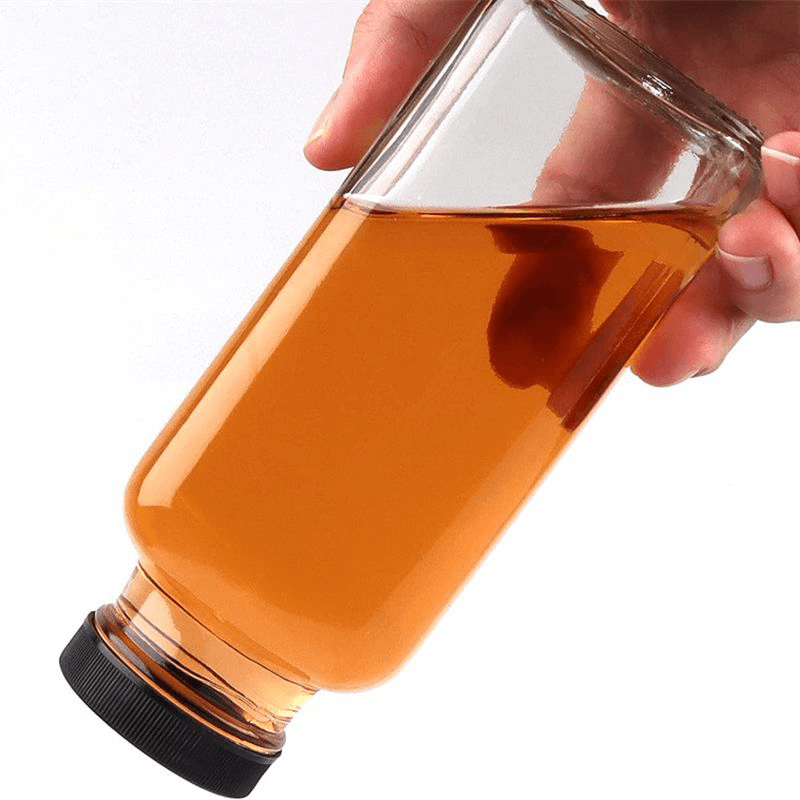
Selecting a standardized industry profile can drastically reduce lead times and eliminate custom tooling expenses. Below is an engineering-focused breakdown of the most prevalent shapes utilized across the modern beverage sector.
Bottle Profile | Ideal Beverage Type | Pressure Tolerance | Common Neck Finish |
|---|---|---|---|
Boston Round | Kombucha, Syrups, Tonics | Moderate to High | 28-400 Thread / 38mm Lug |
French Square | Cold-Pressed Juice, Water | Low (Still Liquids Only) | 38mm / 43mm Twist-off |
Stout Cylinder | Dairy, Protein Shakes, Cold Brew | Low to Moderate | 38mm Drop Ring |
Long Neck | Craft Beer, Sparkling Water | High (>3.0 volumes CO2) | 26mm Crown Pry-off |
Characterized by a cylindrical body and short, gracefully curved shoulders, the Boston Round offers exceptional structural integrity. The continuous, even distribution of glass makes it highly resistant to physical impact on fast-paced conveyor belts. It remains the go-to standard for artisanal kombuchas and concentrated wellness shots.
Featuring a distinct four-sided design with slightly beveled edges, this shape maximizes internal volume while shrinking its external footprint. This geometry allows brands to pack more units onto a retail shelf. Because of the wide mouth typically paired with this shape, it is widely considered the optimal choice for high-end Juice glass bottles, easily accommodating thicker liquids containing natural pulp.
Stout bottles feature tall, straight vertical walls. This uniform width from base to shoulder ensures they travel smoothly through automated star-wheels and filling carousels without tipping. They are highly favored in the dairy and plant-based milk sectors.
Engineered specifically for carbonation, the Long Neck dramatically tapers into an elongated upper section. This allows the consumer to hold the neck, preventing body heat from transferring to the chilled liquid. The narrow headspace also minimizes oxygen ingress, preserving flavor stability over long transit periods.
When dealing with viscous, fruit-based beverages, wide-mouth cylinders and square profiles are the industry standard. A 38mm or 43mm lug finish is crucial for automated filling valves to inject thick liquids rapidly without foaming over. Specifically, the flat sides of square bottles allow grocery retailers to maximize their highly coveted refrigerated shelf space, giving your brand a distinct logistical advantage during buyer negotiations.
Packaging carbonated liquids requires strict adherence to the laws of physics. Carbon dioxide gas exerts significant outward radial pressure equally across the interior of the container. Round bottles distribute this stress evenly. If you attempt to package a highly carbonated drink (e.g., >2.5 volumes of CO2) in a square bottle, the pressure aggressively concentrates at the sharp corners. This drastically increases the risk of stress fractures and explosive failure. Therefore, cylindrical designs are absolutely mandatory for safe Clear glass packaging in the sparkling category.
Dairy brands often utilize heavy-based, vintage milk bottle shapes to evoke farm-fresh authenticity. In stark contrast, the rapidly expanding cold brew sector leans into sleek, minimalist flask-style designs tailored for a fast-paced urban demographic. The structural choice here must balance the target demographic's visual expectations with the physical flow characteristics of the specialty drink.
Visual transparency is a highly persuasive marketing asset. Utilizing premium flint glass allows the physical product to serve as its own advertisement. Consumers inherently want to inspect the vibrant color of a cold-pressed juice or the rich opacity of an oat milk latte before committing to a purchase. When shoppers can literally see real fruit pulp settling gently at the bottom, it visually validates the product's clean-label claims.
While clear glass maximizes immediate shelf appeal, it offers limited defense against ultraviolet (UV) light transmission. If a beverage contains light-sensitive ingredients—such as delicate natural colorants, certain vitamins, or hop compounds—prolonged UV exposure can trigger photo-oxidation, leading to flavor degradation. In these specific scenarios, beverage engineers must weigh visual appeal against product stability, sometimes opting for UV-protective clear coatings, full-wrap shrink sleeves, or transitioning to amber glass.
Stock bottle shapes offer excellent operational reliability, but they can make shelf differentiation difficult. To capture wandering consumer attention, premium brands are increasingly investing in bespoke structural designs. Developing a proprietary mold creates a unique silhouette that competitors cannot legally replicate, instantly cementing brand recognition.
There are multiple techniques to achieve Personalized glass packaging. Custom embossing or debossing allows you to recess your brand typography or intricate patterns directly into the glass during the blow-and-blow molding process. Other high-impact options include acid-etching (frosting) for a matte finish, or direct-to-glass ceramic screen printing, which fuses ink directly into the glass surface during a high-temperature baking phase.
The geometric footprint of your bottle directly impacts outbound freight economics. Square and rectangular bottles boast exceptional packing efficiency. Because their flat sides sit perfectly flush against one another inside a corrugated master carton, they eliminate the "dead space" inherent to cylindrical objects. This geometric advantage translates directly to more units per pallet, lower shipping costs per ounce, and a reduced carbon footprint.
Symmetrical, round bottles rotate easily and are less prone to jamming in high-speed guide rails. Conversely, asymmetrical designs or shapes with a high center of gravity may require custom handling pucks and slower overall line speeds to remain stable during rapid acceleration and deceleration. Furthermore, if your process involves hot-filling (e.g., pasteurized juices at 85°C), the glass must possess rigorous thermal shock resistance. Sourcing High-quality glass bottles ensures the containers have undergone proper annealing, allowing them to withstand a sudden temperature differential (ΔT) of at least 42°C without fracturing.
Specifying the optimal bottle shape is a precise balancing act between visual branding, fluid dynamics, and supply chain efficiency. Whether your beverage demands the pressure-resistant safety of a classic round profile for carbonation, or benefits from the space-saving, modern appeal of a square footprint, the geometry you select fundamentally defines your product. By prioritizing premium manufacturing standards, understanding the technical limits of your liquid, and leveraging the power of custom personalization, you can source a container that performs flawlessly on the filling line and captivates consumers at the point of sale. Ready to elevate your beverage line? Browse our extensive catalog and find the exact specifications you need to scale your brand at https://www.sdjyglass.com.
Generally, no. Square bottles possess inherent structural weak points at their sharp corners. Under the intense internal pressure exerted by carbon dioxide gas, these corners become highly susceptible to stress fractures and explosive breakage. Round, cylindrical bottles are engineered to distribute this pressure evenly and remain the strict industry standard for safely packaging sparkling drinks.
The French Square and standard wide-mouth Cylinder shapes dominate the juice sector. They offer a premium aesthetic and accommodate wider neck finishes (like 38mm or 43mm) necessary for handling fruit pulp. Additionally, square bottles maximize limited refrigerator shelf space, making them highly desirable for grocery placement.
Neck finishes vary based on the closure type and beverage. Standard still beverages often use a 28-400 continuous thread or a 38mm lug/twist-off finish for wider pours. Carbonated craft beers and sodas typically utilize a 26mm crown pry-off finish to hold high internal pressure securely.
Shape directly dictates packing density. Square and rectangular bottles sit flush against each other, eliminating dead air space in shipping cartons. This allows brands to fit more units per pallet compared to round bottles, effectively lowering the outbound freight cost per unit.
Clear flint glass is completely impermeable, preserving the intended taste profile perfectly. However, it does not block UV light. If your beverage contains delicate, light-sensitive ingredients that degrade under fluorescent store lighting, you may need to apply UV-coated clear glass, use full-wrap shrink sleeves, or transition to amber glass to maintain optimal shelf life.
Developing a proprietary custom mold requires a notable initial capital investment for tooling. However, for smaller budgets, utilizing direct ceramic screen printing or custom textured labels on high-quality stock shapes serves as a highly effective, scalable alternative to full custom molds.
Premium glass is identified by excellent optical clarity, uniform wall thickness, and precise threading at the neck finish. Always ensure your supplier provides proper quality assurance documentation, including thermal shock testing data (ΔT resistance) and verifiable food-safe manufacturing certifications before committing to a bulk order.


