
Views: 0 Author: Site Editor Publish Time: 2026-09-08 Origin: Site


Have you ever watched a perfectly poured candle tunnel straight down the middle? It is a frustrating loss of time and material. You spend hours meticulously calibrating fragrance loads and pouring wax, only to have a mismatched wick ruin the final burn.
Analyzing recent market data reveals a strict shift in consumer standards. Today's buyers demand flawless indoor air quality and sustainable, zero-waste burning. They will no longer tolerate black soot on glass rims or stubborn half-burned wax walls. Consequently, precision wicking is no longer just a basic manufacturing step. It is the ultimate marker of your brand's technical quality and reliability. In this technical guide, we break down the exact engineering principles needed to size wicks for any vessel, ensuring a flawless, professional-grade burn every single time.
Measure the Inside Diameter: The interior width of your container's opening establishes the foundational baseline for your wick size.
Mind the Melt Pool: A correctly calibrated wick achieves thermal equilibrium. It should reach a full melt pool—touching the absolute edges of the glass—within two to four hours.
Jar Shape Matters: Tapered vessels, wide-mouth designs, and outdoor memorials demand unique, specialized wicking strategies to operate safely.
Test Before Mass Producing: Variables like fluid wax viscosity, fragrance load, and glass wall thickness make standardized burn tests a mandatory safety protocol.
Think of a candle as a miniature combustion system. The entire process relies on capillary action. When you light a wick, the initial heat melts the surrounding wax. The wick then acts as a microscopic fluid pump. It absorbs this liquid fuel and draws it upward to sustain the flame.
If the pump's capacity does not match the diameter of your container, this delicate thermal balance fails. The physical width of the vessel is the ultimate deciding factor. It dictates exactly how much heat is required to melt the wax evenly across the entire surface.
Under-wicking occurs when your chosen wick is simply too small to generate the necessary heat for the vessel's specific diameter. In practice, the flame only manages to melt a localized ring of wax directly around the center. As the candle burns downward, it leaves a thick wall of hard wax clinging to the sides.
This frustrating phenomenon is universally known as tunneling. It severely reduces the total burn time of your product. Furthermore, it traps expensive fragrance oil inside the unmelted wax, leaving the end-user with a highly disappointing olfactory experience.
In contrast, selecting a wick that is too large creates a genuinely hazardous situation. An oversized wick draws up liquid fuel far too rapidly. This results in an erratic flame that grows excessively tall. It generates an overly deep melt pool and releases unburned carbon—visible as black soot—into the room.
More importantly, this aggressive heat transfers directly to the vessel walls. Prolonged exposure to localized high temperatures can cause inferior glass to fracture or shatter violently. This reality highlights the absolute necessity of using professional-grade Glass Candle Jars. High-quality vessels are specifically manufactured and properly annealed to withstand sustained thermal stress without failing.
Selecting the correct wick begins with highly precise measurements. Never guess wick size based on visual volume. Assuming an 8oz tin and an 8oz tumbler use the same wick is a costly error. Two jars holding the exact same volume often feature entirely different opening diameters.
To establish your baseline wick size, you must measure the inside diameter of the opening. First, wipe the rim clean. Next, lay a digital caliper or a standard ruler flat across the exact center of the jar. Measure meticulously from the inside edge of the glass to the opposite inside edge.
Do not include the thickness of the glass walls in your calculation. The flame only needs to generate enough heat to melt the wax contained within that interior space. Record this measurement in inches, as the vast majority of standard wick sizing charts utilize imperial units.
Straight-sided containers are wonderfully straightforward. The diameter remains perfectly consistent from top to bottom. Tapered jars, however, require strategic foresight. These are vessels that are wider at the base and narrower at the top, or vice versa.
Top-Heavy Tapers: If the receptacle is wider at the top rim, wicking strictly for that top diameter is risky. The flame may become dangerously hot as it burns down into the narrower bottom section.
Bottom-Heavy Tapers: If the container is wider at the base, wicking for the narrow top will inevitably result in tunneling once the flame reaches the expansive lower half.
As a general engineering rule within the industry, it is always safer to wick for the widest part of the container. While this strategy may cause the narrower sections to burn slightly warmer, it prevents the candle from suffocating itself in a tunnel of hard wax later on.
Once you secure an accurate inside diameter, you can confidently establish a baseline wick size. The following table provides a reliable starting reference based on standard industry measurements. Keep in mind that these are initial recommendations. Your specific wax blend and fragrance load will ultimately alter the final requirement.
Jar Diameter (Inside) | Classification | Recommended Wick Series (Baseline) | Wicking Strategy |
|---|---|---|---|
1.5 to 2.0 inches | Small Jars & Tins | ECO 1 - 2, CD 4 - 6, LX 12 - 14 | Single Wick |
2.0 to 2.5 inches | Standard Medium | ECO 4 - 6, CD 8 - 10, LX 16 - 18 | Single Wick |
2.5 to 3.0 inches | Large Medium | ECO 8 - 10, CD 12 - 14, LX 20 - 22 | Single Wick |
3.0 to 3.5 inches | Large Jars | ECO 12 - 14, CD 18 - 20, LX 24 - 26 | Single or Double Wick |
3.5 to 4.0+ inches | Extra Large / Bowls | ECO 8 (x2), CD 6 (x2) | Double or Triple Wick |
For narrow, restrictive vessels, generating too much ambient heat is the primary risk factor. Small wick series, such as ECO 1, CD 4, or delicate cotton core wicks, are typically more than sufficient. These provide a controlled, low-temperature burn. They gently melt the wax without overheating the tightly confined space.
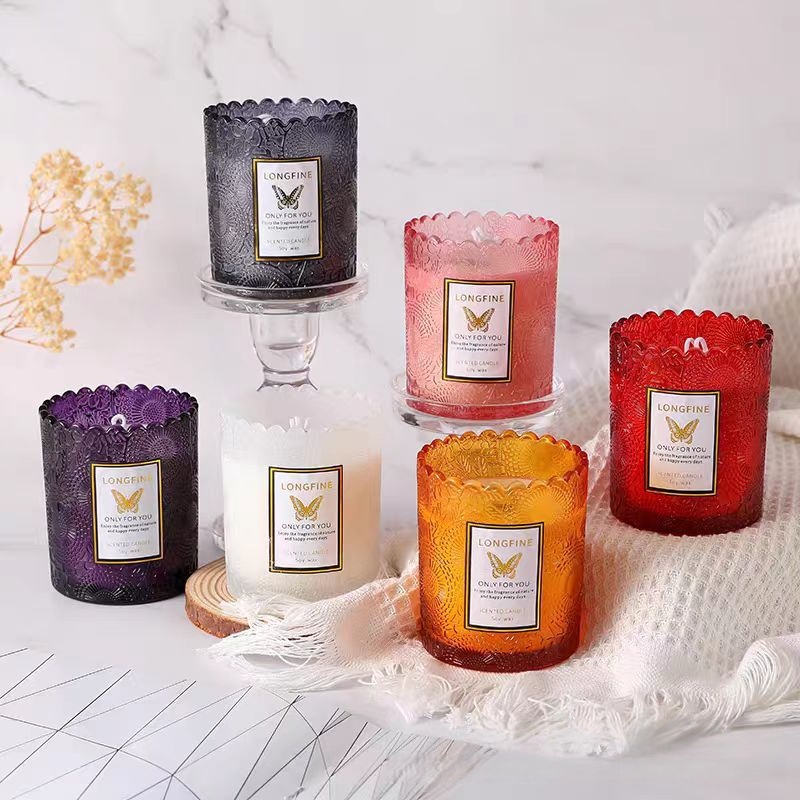
This diameter bracket represents the most common size for standard retail products. Medium-sized wicks like the ECO 4-8 or CD 8-12 series perform optimally here. This size range is particularly ideal for elegant, decorative containers. For instance, a premium 250ml candle glass jar featuring intricate embossed textures requires a steady, even burn. A precise wick beautifully illuminates the glass design from within, without causing unsightly soot buildup on the rim.
When a container's diameter stretches beyond 3 inches, a single wick often struggles. It cannot achieve a full edge-to-edge melt pool without creating a massive, soot-producing flame. In vessels measuring 3.5 inches or wider, transitioning to a double-wick system is highly recommended. Utilizing two smaller wicks distributes the thermal energy evenly across a wider surface area. This ensures a remarkably clean burn while preventing the center of the glass base from overheating.
The physical dimensions of a container are only one piece of the puzzle. The specific environment in which the candle will be enjoyed heavily dictates the type of wick required. Furthermore, the structural design and material of the vessel itself play a massive role in heat retention.
A classic transparent candle jar is the absolute preferred baseline vessel for conducting initial laboratory burn tests. The clear, unobstructed glass allows makers to visually inspect the exact depth of the melt pool. You can monitor the wick's behavior beneath the liquid surface and ensure there are no hidden air pockets trapped inside the cooling wax. For indoor ambiance, these containers require standard cotton or paper-core wicks that provide a steady, visually soothing flame.
Candles specifically designed for outdoor memorials face a barrage of unique environmental challenges. They are routinely exposed to gusting winds, drastic temperature fluctuations, and unexpected precipitation. Therefore, the internal wicking strategy must adapt aggressively. Outdoor Cemetery Jars typically feature much taller glass rims designed to shield the fragile flame from drafts. Consequently, they require a significantly more robust wick—often a heavily braided cotton core or a chemically treated paper core. These specialized wicks burn notably hotter, a necessary feature to combat the constant cooling effect of outdoor air pressing against the glass.
Many artisan makers love to repurpose high-end kitchen-grade glass for their creative projects. If you are utilizing Heat-resistant food containers as your primary vessels, it is crucial to understand their material composition. High borosilicate glass handles thermal shock exponentially better than standard soda-lime glass. Because borosilicate retains and distributes heat differently, the melt pool forms at an altered rate. While these jars offer premium safety for hot-burning applications, you must still rigorously test your standard wick sizes. You need to ensure the superior heat retention doesn't cause the liquid pool to become dangerously deep over a standard four-hour burn.
While measuring the opening provides the foundational baseline, the specific "fuel" housed within the container fundamentally alters the combustion dynamics. Variables such as fluid wax viscosity, melt point, and chemical additives directly impact the capillary action.
Different waxes possess distinct molecular structures, resulting in drastically varying viscosities when melted. If the pump size (the wick) does not match the fluid thickness (the wax), the system will fail.
Soy Wax: Natural vegetable waxes are notoriously dense and viscous. They require vigorous capillary action to move the heavy liquid upward. When working with soy, you typically need to size up and utilize wicks designed specifically for high-viscosity fuels, such as the CD or ECO series.
Beeswax: As one of the hardest natural waxes available, beeswax boasts an exceptionally high melting point. It demands the hottest, most aggressive wicking available. Square braid cotton wicks remain the industry standard here. Their open structural weave allows for maximum fuel absorption.
Paraffin Wax: Paraffin is a highly refined material that melts easily into a thin, highly combustible liquid. Because it transitions so efficiently, paraffin requires smaller, cooler-burning wicks to prevent overheating the container. Zinc core or LX series wicks are highly recommended.
A common misconception is that fragrance oils and liquid dyes simply blend into the wax without affecting how it burns. In reality, these additives are non-combustible impurities that actively hinder wick performance.
When you introduce a heavy fragrance load (such as 8% to 10%), you are adding dense oils that the wick must attempt to absorb and burn off. These oils, alongside microscopic pigments found in dark candle dyes, easily clog the delicate fibers of the wick. This clogging severely restricts fuel flow. It often leads to a shrinking flame that eventually suffocates itself. If you plan to use maximum fragrance loads, standard engineering practice dictates sizing up your wick by at least one increment to compensate.
Theoretical sizing charts and mathematical measurements only provide an educated starting point. You never truly know if a specific wick is the correct match until you conduct a rigorous, controlled burn test. This is a mandatory quality assurance protocol.
Industry safety standards dictate that a container candle should always be evaluated based on a continuous four-hour burn cycle.
To execute this test properly, allow your fully cured candle to reach standard room temperature in a draft-free space. Trim the wick precisely to 1/4 inch to prevent initial flare-ups. Light the candle, set a timer for exactly four hours, and do not move the jar during this period. The four-hour mark is critical. It represents the maximum time a consumer should safely burn a candle, allowing you to accurately assess the peak thermal stress placed on the glass.
The primary objective during this test is to observe the development of the liquid wax.
By hour three or four, the melted pool should reach the absolute edges of the glass. There should be no hard wax clinging to the sides. The ideal depth of this liquid should sit at approximately 1/2 inch. If the pool is deeper than 3/4 of an inch, or if the exterior glass is too hot to comfortably touch, the wick is generating excessive heat. Conversely, if a thick ring of hard wax remains untouched after four hours, the wick is simply too weak.
Even with careful calculation, initial burn tests frequently reveal unexpected performance quirks. Understanding how to quickly diagnose and correct these anomalies is essential for producing professional-grade inventory.
If you observe a hard, black, mushroom-shaped carbon cluster forming at the tip of the wick, accompanied by dark soot staining the inside of the glass, you are witnessing incomplete combustion. The wick is drawing up more fuel than the flame can efficiently burn off.
To fix this, first ensure you are trimming the wick to 1/4 inch before every single burn. If the mushrooming persists despite trimming, you must size down the wick by one increment. Alternatively, switch to a wick series engineered to self-trim, such as the LX line.
Sometimes a candle lights beautifully, but over the course of an hour, the flame becomes progressively weaker until it extinguishes itself beneath a pool of liquid wax. This is a classic drowning wick scenario. The ambient heat is melting the surrounding wax much faster than the wick's capillary action can consume it.
The solution is straightforward: size up to a larger wick diameter to increase the fuel consumption rate. However, if a larger wick suddenly causes the jar to overheat, the root issue may actually be an excessive fragrance load clogging the fibers. In that specific case, reduce your fragrance percentage slightly and retest.
Achieving the perfect burn is a strict blend of precise measurement and mindful testing. By starting with the exact inside diameter of your container, you set a solid engineering foundation. From there, factoring in the unique viscosity of your wax and the density of your fragrance oils will guide you to the perfect wick choice.
Never skip the four-hour burn test. It is your ultimate safeguard against tunneling and dangerous overheating. By investing time in proper wicking and sourcing reliable, high-quality glassware, you guarantee a safe, long-lasting product. For makers looking to elevate their brand with premium, thermally stable vessels, explore the extensive catalog at SDJY Glass to find the perfect jars engineered for optimal combustion and safety.
Yes. If your vessel has an inside diameter wider than 3.5 to 4 inches, utilizing two or three smaller wicks is highly recommended. Multiple smaller wicks create a safer, more evenly distributed heat profile and prevent the dangerous localized overheating associated with using one massive, single wick.
The color, frosting, or visual transparency of the glass does not have a measurable impact on the internal burn temperature. However, the exact material composition (such as borosilicate versus standard soda-lime) and the physical thickness of the vessel walls do significantly affect how heat is retained and dispersed.
Because they are subjected to wind, drafts, and fluctuating ambient temperatures, outdoor memorials require highly robust wicks that resist blowing out. Thicker cotton core or treated paper core wicks are ideal. These should always be paired with a high-melt-point wax to survive harsh outdoor conditions.
Black smoke, or soot, is a definitive indicator of incomplete combustion. It generally means your wick is too large for the container's diameter, the wick was not properly trimmed to 1/4 inch before lighting, or the candle is situated in a drafty environment that is aggressively disrupting the flame's stability.
Fragrance oils add density and non-combustible material to your wax. A high fragrance load (over 8%) can clog the capillary fibers of the wick, restricting fuel flow and causing a weak flame. You typically need to increase your wick size by one level to compensate for heavy fragrance loads.
If your liquid wax pool exceeds 3/4 of an inch in depth during a standard four-hour burn test, your wick is generating too much heat. This can cause the glass to overheat and potentially crack. You should extinguish the candle, let it cool, and retest the exact same wax formulation with a wick that is one size smaller.


